
There is no shortage of free TEAS questions. The problem is that most people use them as a scoreboard, answering a hundred, noting the percentage and moving on. That measures where you are. It does not move you.
The rule that makes practice work
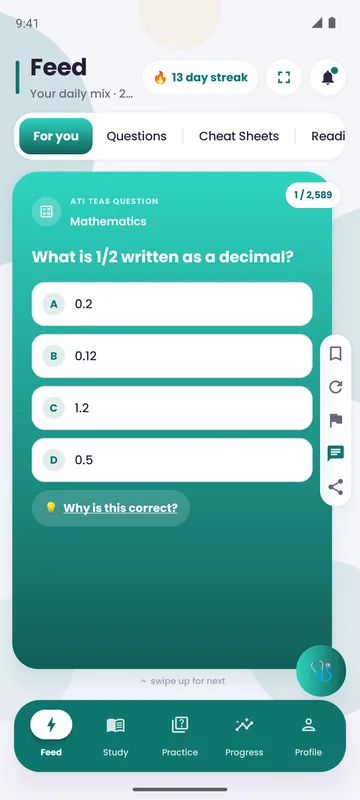
Read the rationale for every option, including on questions you answered correctly. A multiple-choice exam is mostly the skill of eliminating three wrong answers, and you only build that by understanding why they are wrong. If you got it right by narrowing it to two and guessing, that question is not learned, and it will reappear on the exam wearing different clothes.
Where free questions mislead
They are usually untimed. Untimed practice makes the TEAS feel easier than it is. The exam gives you roughly 74 seconds a question and closes each section without warning.
They are usually single-section. The hardest part of the real exam is being two hours in when Science starts. Twenty-question sets never rehearse that.
Quality varies. A question written to a different blueprint teaches you a fact the exam will not ask. Prefer questions that name the section and topic they map to, so you can tell whether you are actually covering the outline.
Track topics, not scores
After each set, write down the topic of every question you missed, not the question itself. After a week you will have a list, and the list will be short and repetitive: measurement conversion, subject and verb agreement, the endocrine system. That list is your study plan, and it is worth more than any score you recorded.
Then sit one full-length attempt
Once, before the real thing, do all four sections in order, timed, in one sitting, with no phone. It is unpleasant and it is the single highest-value thing you can do, because it converts every surprise on test day into a surprise you have already had.
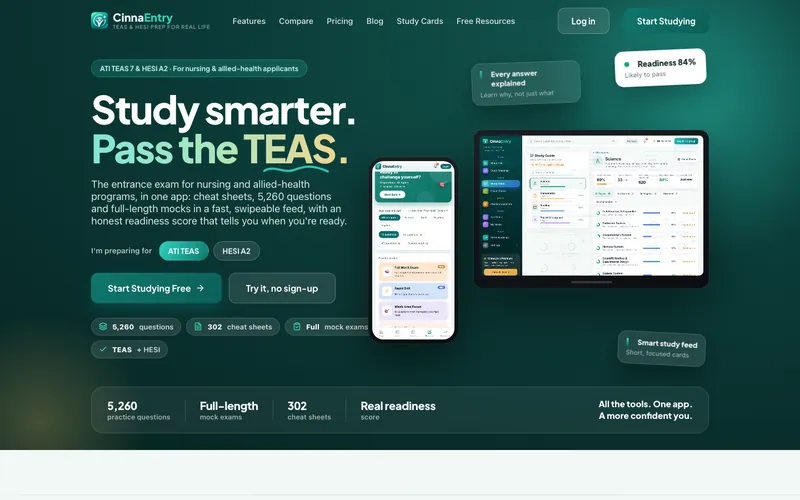
CinnaEntry gives a set of practice questions, cheat sheets and a full mock diagnostic free every day, with a rationale on every option, and it tags each question by section and topic so the weak-topic list builds itself. You can start without an account. If you want the study plan around it, read the six-week plan.